
Bigger Films, Better Icebreakers and Fewer Weather Guesses | Vol. 46
Five editorially chosen picks: one hero, three supporting acts, and one wildcard. This drop is designed to be browsed as a full collection, not just a pile of affiliate links.
Hero Pick
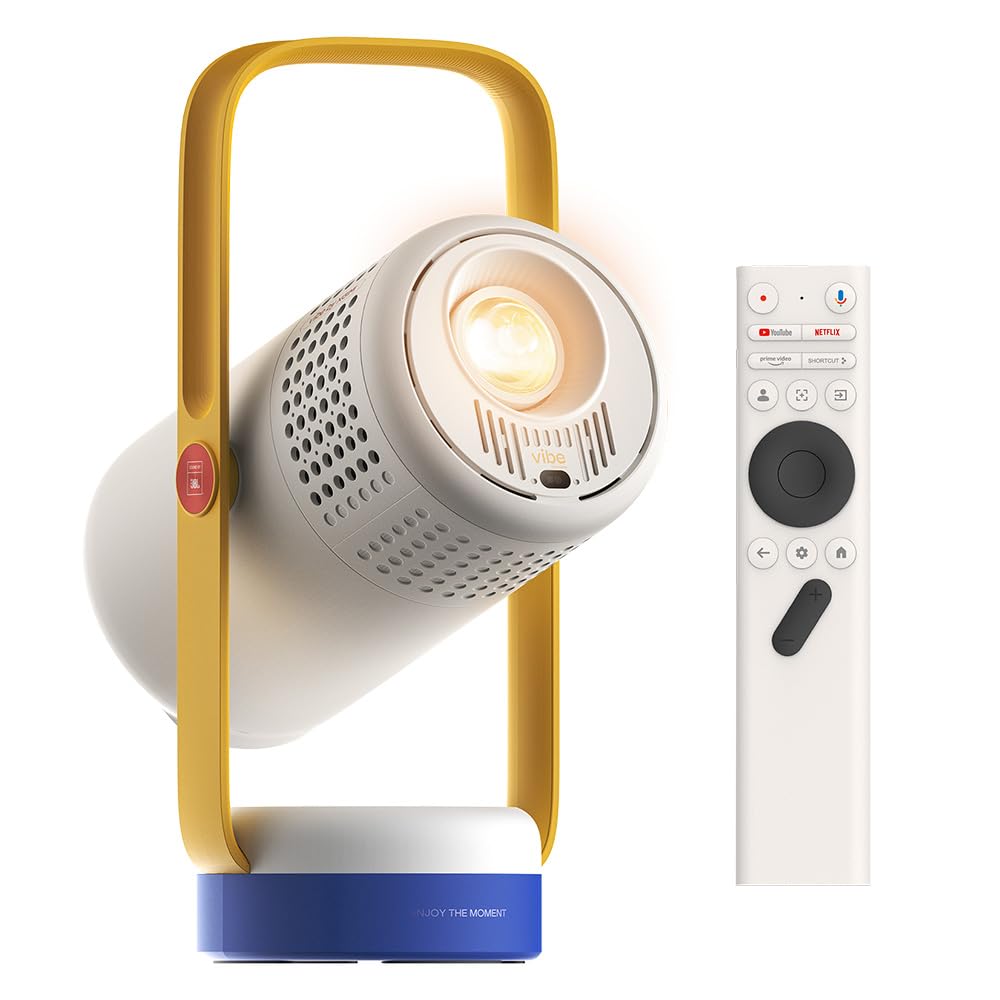
XGIMI Vibe One Portable Projector
A battery-powered 1080p projector with automatic focus and keystone correction, plus a 160° stand that doubles as its handle. The XGIMI Vibe One makes moving the screen around appealingly straightforward; keeping it running through a full-length film is another matter.
At a glance
Everything in this drop
XGIMI Vibe One Portable Projector
A battery-powered 1080p projector with automatic focus and keystone correction, plus a 160° stand that doubles as its handle. The XGIMI Vibe One makes moving the screen around appealingly straightforward; keeping it running through a full-length film is another matter.

CMYK Wavelength Party Game
Wavelength is a two-team social guessing game for 2–12 players, aged 14 and over. One player gives a clue to locate a hidden target between two concepts; their teammates try to judge where it belongs. Knowing your friends is useful. Agreeing with them is another matter.

Netatmo NWS01-EU Indoor Outdoor Weather Station
A two-module weather station that measures indoor and outdoor temperature, with mean sea-level pressure measured indoors. The outdoor sensor reports wirelessly to the indoor module, which sends both sets of measurements to a Netatmo account over Wi-Fi. For those who would prefer their weather conversations to have supporting evidence.
Rolife Silent Corner Study Book Nook Miniature Model Kit
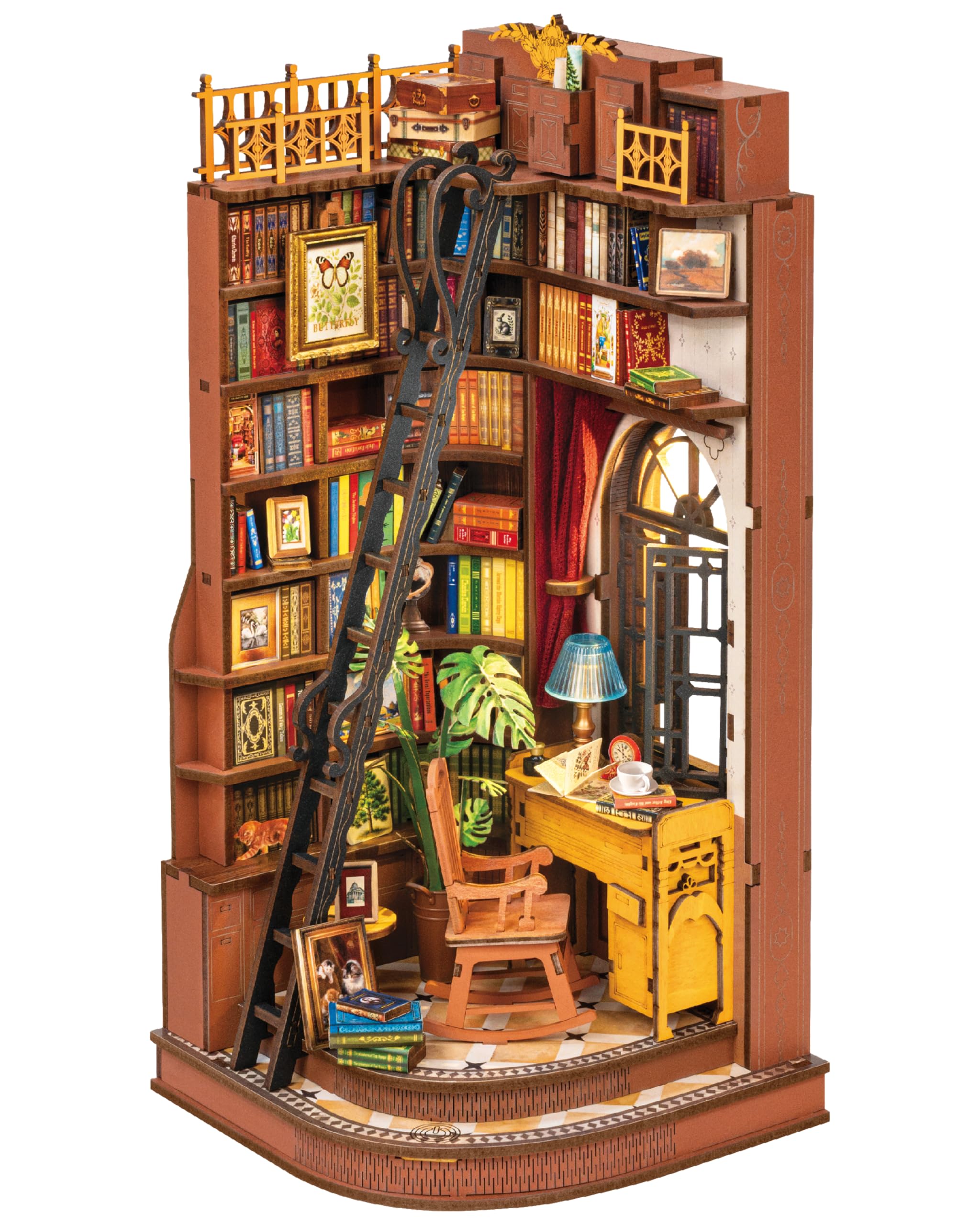
A 196-piece DIY miniature kit that builds into a study/library book nook at 1:24 scale. Rolife’s Silent Corner Study turns the idea of a quiet reading space into a small construction project: you assemble the room rather than merely wishing you had one.

Atari 2600 Plus Games Console
The Atari 2600+ is a cartridge-playing retro console with HDMI output, a CX40+ joystick and a 10-in-1 game cartridge included. It brings a very physical sort of gaming back to the television, without requiring the television to be equally ancient.
Deep dive
Why each pick earned its place

XGIMI Vibe One Portable Projector
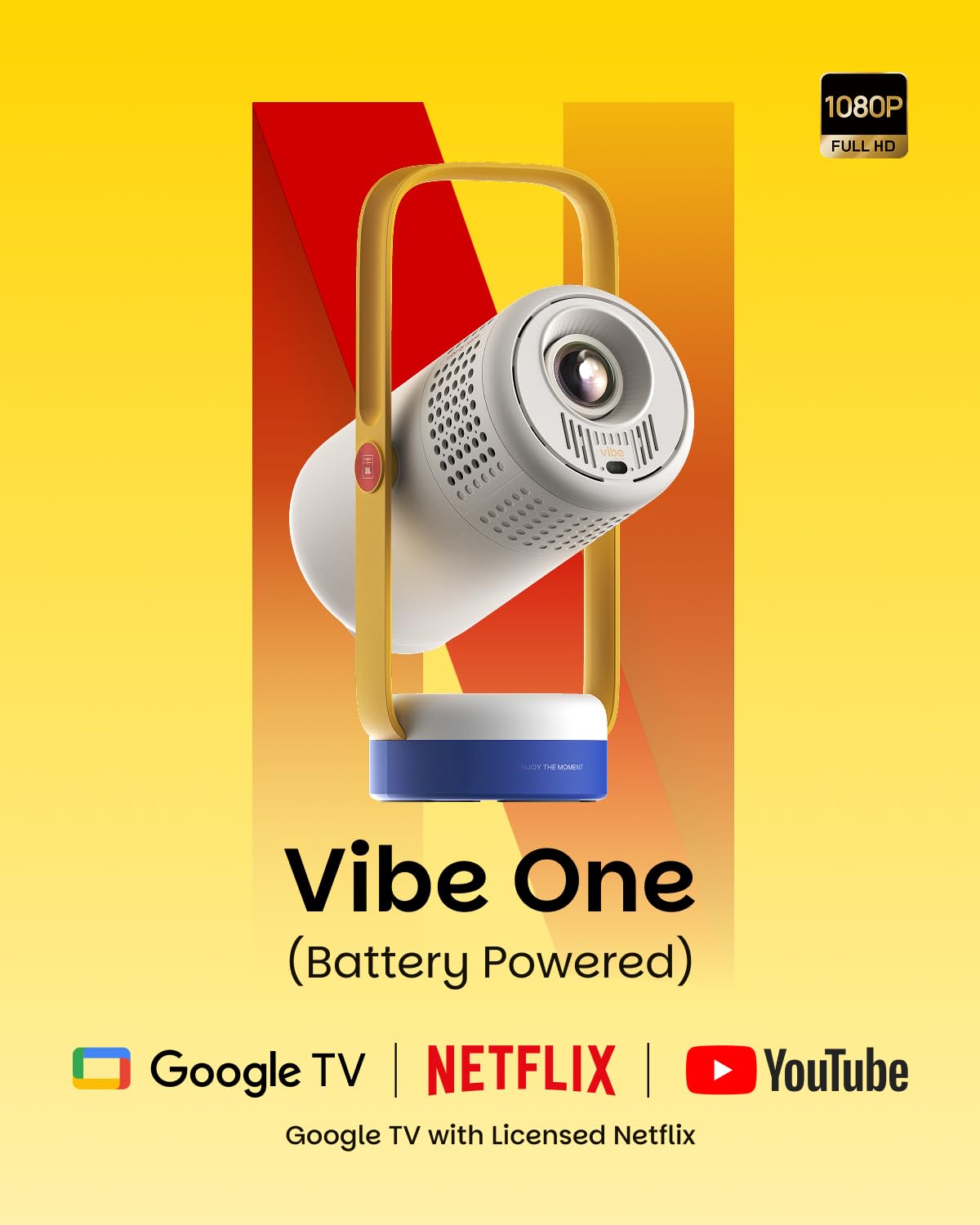
A battery-powered 1080p projector with automatic focus and keystone correction, plus a 160° stand that doubles as its handle. The XGIMI Vibe One makes moving the screen around appealingly straightforward; keeping it running through a full-length film is another matter.
Price
£179
Editorial rating
4.5 / 5
At a glance
One-line verdict
The XGIMI Vibe One is an appealing portable projector for flexible, short-session viewing, but its 72-minute maximum battery runtime makes unplugged film nights a stretch.
Best for
Viewers who want to move a projector between rooms, aim it without a separate stand and watch in dim conditions, with mains power nearby for longer sessions.
Skip it if
You want to finish most feature films on battery power, or need a projector for a brightly lit room.
The full picture
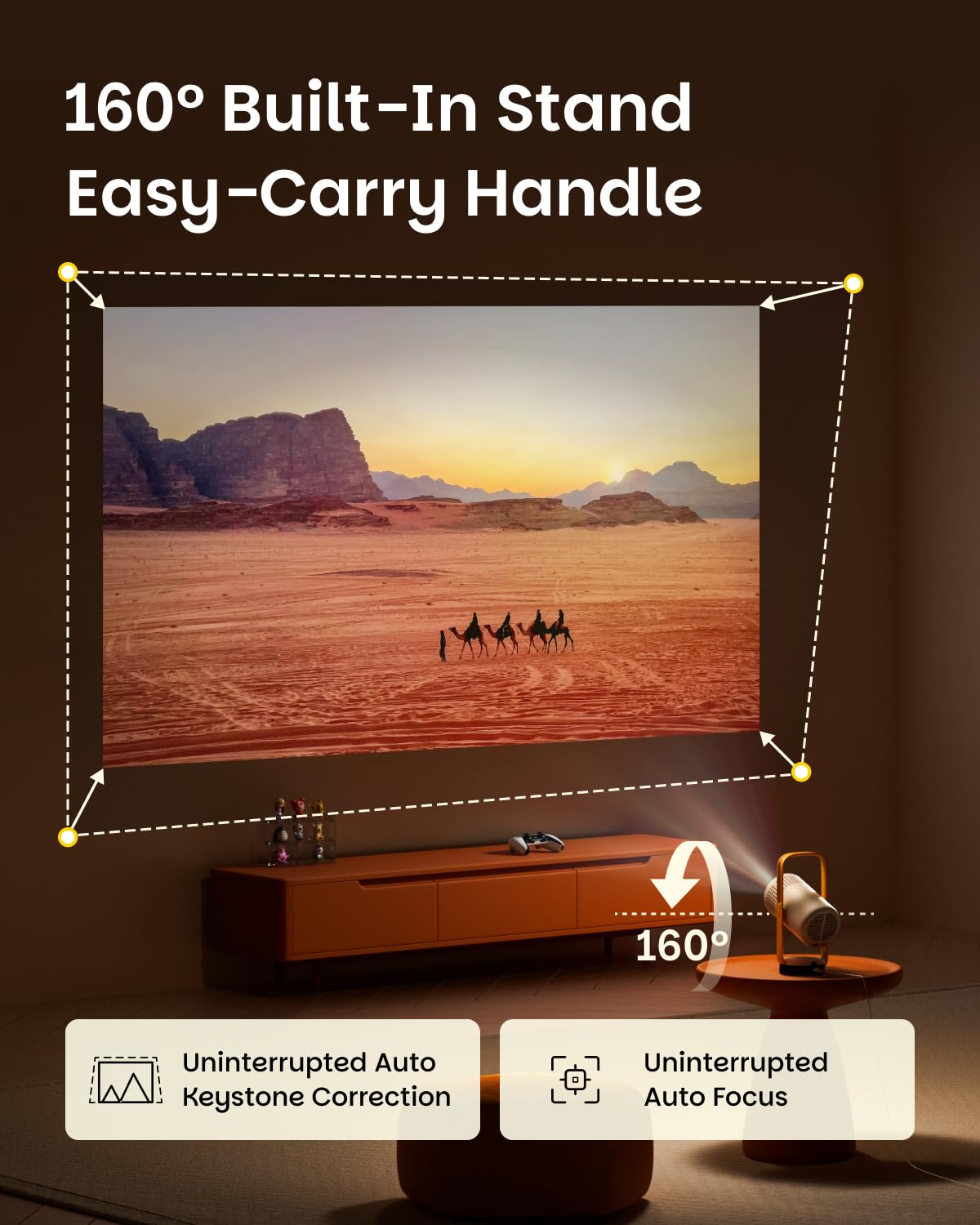
The most persuasive part of the XGIMI Vibe One is its stand. That may sound like faint praise for a projector, but a screen you can move around needs a better positioning strategy than a stack of hardbacks. Here, the built-in support adjusts through 160° and doubles as a carry handle. It gives the portable idea a useful physical form rather than merely putting it on the box.
That flexibility suits someone who wants occasional big-screen viewing in different rooms without committing furniture to the cause. Uninterrupted autofocus and automatic keystone correction are intended to take some of the adjustment out of each move. They do not abolish placement altogether: XGIMI advises keeping the side throw angle within 25°, and complex environments can still require manual correction. Think less fiddling, not permission to point it vaguely from behind a lampshade.
The picture specification is native 1920 × 1080, using LCD projection and an LED light source. At a listed 250 ISO lumens, this is a projector to plan around dim conditions, rather than one to enlist against afternoon sunshine. XGIMI recommends a 60–120-inch image within the wider supported 45–150-inch range. There is little virtue in chasing the largest possible rectangle if the room and lighting cannot support it; the wall does not award points for ambition.
Positioning also controls image size more than some buyers might expect. The throw ratio is 1.3:1, and there is digital zoom but no optical zoom. The adjustable stand helps with aiming, not with making the room longer. Before choosing its permanent occasional home, it is worth thinking about the distance between projector and viewing surface, not just where it looks neat.
Then comes the battery, which needs reading rather more carefully than the word ‘portable’. Its 38.48 Wh capacity is rated for up to 1.2 hours of video in Eco Mode, with brighter operation reducing that figure. Unplugging automatically puts it into Eco Mode. Seventy-two minutes gives you scope for an episode or a short viewing session, but not most feature films. For a full film night, plan on mains power; otherwise the projector may leave before the villain has explained himself.
One HDMI input and one USB input provide physical connection options, without turning this into a multi-source home-cinema hub. That fits the overall proposition. The Vibe One is most convincing as an easily repositioned, dim-room projector that can spend short periods away from a socket. Choose it for that adjustable, self-contained approach—not because a built-in battery necessarily means a whole evening untethered.
The Irresistible
- The 160° adjustable stand doubles as a carry handle, giving portable viewing a practical positioning solution.
The Clever Part
- Native 1920 × 1080 resolution suits its big-screen viewing role.
- Autofocus and automatic keystone correction reduce setup work after repositioning.
- One HDMI input and one USB input provide physical connection options.
The Fine Print
- The 250 ISO-lumen brightness calls for dim viewing conditions rather than a brightly lit room.
- No optical zoom means image sizing still depends on where you can place the projector.
The Reality Check
- Battery video playback tops out at a claimed 72 minutes in Eco Mode, with less runtime at higher brightness—not enough for most feature films.
Buyer questions answered
How long does the XGIMI Vibe One battery last?
XGIMI specifies up to 1.2 hours, or 72 minutes, of video playback in Eco Mode. Brighter operation reduces runtime, and the projector automatically starts in Eco Mode when unplugged.
Is the XGIMI Vibe One native 1080p?
Yes. Its standard resolution is 1920 × 1080 pixels, using an LCD display with an LED light source.
What screen size does the XGIMI Vibe One support?
The listed image-size range is 45–150 inches, but XGIMI recommends 60–120 inches for the best viewing experience. It warns that sizes outside that recommended range may affect image quality.
Does the XGIMI Vibe One have automatic focus and keystone correction?
Yes, it supports uninterrupted autofocus and automatic keystone correction. XGIMI advises keeping the side throw angle within 25° for accurate calibration; complex environments may require manual correction.
Does the XGIMI Vibe One have optical zoom?
No. It supports digital zoom, but has no optical zoom, so physical placement remains important when sizing the picture.


CMYK Wavelength Party Game
Wavelength is a two-team social guessing game for 2–12 players, aged 14 and over. One player gives a clue to locate a hidden target between two concepts; their teammates try to judge where it belongs. Knowing your friends is useful. Agreeing with them is another matter.
Price
£19.99
Editorial rating
4 / 5
At a glance
One-line verdict
A distinctive party game that turns differences of interpretation into the entertainment, provided your group enjoys discussing a clue rather than finding one objectively correct answer.
Best for
Friends and families with players aged 14 and over who enjoy verbal clues, subjective judgments and discovering quite how differently they interpret the same idea.
Skip it if
Your group wants factual answers and minimal discussion, or you need a copy guaranteed to include English-language instructions.
The full picture
Wavelength makes a game out of the gap between what someone says and what everyone else thinks they mean. Instead of asking your team to retrieve a fact, it asks them to interpret a clue precisely enough to locate a hidden target on a spectrum. This is a much more interesting test of friendship than remembering a birthday, though probably not an acceptable replacement.
The central mechanism gives that interpretation a measurable destination. Each round, one player supplies a clue intended to place the target somewhere between two concepts. Their teammates judge where it belongs, and guesses nearer the target’s centre score more. You are not simply identifying an idea: you are deciding how strongly it leans in a particular direction. That distinction is the reason to choose Wavelength over a more conventional guessing game.
It also creates an appealing tension for the clue-giver. A clue needs to communicate a position, not merely point towards one end of the spectrum. Something that seems perfectly calibrated in one person’s head may land rather differently with the rest of the team. The resulting disagreement is not a diversion from the game. It is largely what you came for. There is considerable social potential in discovering that someone you know well has been operating a completely different internal scale all this time.
For a mixed gathering, the attraction is a shared task built around interpretation rather than factual recall. The two-team structure gives players a common decision to work towards, while the stated 2–12-player range accommodates different-sized gatherings. That range is useful flexibility, although it should not be read as a promise that a pair and a full room will produce the same social experience. The manufacturer recommends ages 14 and over, so this is a family option for teenagers and adults rather than a universal children’s game.
The main compromise follows directly from its appeal. If your group dislikes subjective judgments, or wants an answer that can conclusively end an argument, Wavelength may feel like an organised invitation to disagree. A hidden target settles the scoring; it does not establish whose interpretation was philosophically correct. Anyone hoping to have the final word should make other plans.
There is also a practical edition caveat: English-language instructions are not guaranteed with the listed contents. That matters for a game whose starting point is communicating meaning, and rules-language certainty is worth treating as a buying requirement rather than an afterthought.
Our judgment is that Wavelength earns its place by giving conversation a genuinely purposeful mechanism. Choose it for people who enjoy working out how others think, not merely proving that their own answer is right. The target supplies the discipline; your friends supply the questionable reasoning.
The Irresistible
- The hidden target turns subjective clue interpretation into a precise shared challenge, rather than an open-ended conversation.
The Clever Part
- Closer guesses score more, so accuracy matters beyond simply choosing the right end of the spectrum.
- Supports 2–12 players, with a recommended minimum age of 14.
The Fine Print
- Subjective interpretation is central to play; groups wanting factual certainty or little discussion may find it frustrating.
- English-language instructions are not guaranteed.
Buyer questions answered
How many people can play Wavelength?
Wavelength supports 2–12 players and is described as a two-team social guessing game.
What age is Wavelength suitable for?
The manufacturer recommends Wavelength for ages 14 and over.
How does Wavelength work?
Each round, one player gives a clue intended to place a hidden target along a spectrum between two concepts. Their team guesses the target’s position, scoring more the closer its guess is to the centre.


Netatmo NWS01-EU Indoor Outdoor Weather Station
A two-module weather station that measures indoor and outdoor temperature, with mean sea-level pressure measured indoors. The outdoor sensor reports wirelessly to the indoor module, which sends both sets of measurements to a Netatmo account over Wi-Fi. For those who would prefer their weather conversations to have supporting evidence.
Price
£86.69
Editorial rating
3.5 / 5
At a glance
One-line verdict
A useful connected weather station for comparing conditions inside and outside your home, provided you are happy with a powered indoor module and a Wi-Fi-and-account setup.
Best for
Householders who want to compare indoor and outdoor temperatures and prefer measurements sent to an online account rather than an entirely standalone instrument.
Skip it if
You want an account-free, wholly battery-powered weather station, or cannot position the outdoor sensor within a workable radio connection of the indoor module.
The full picture
The Netatmo NWS01-EU is for the person who finds “the weather here” an insufficiently precise concept. Here inside, or here outside? Its two-module arrangement gives those places separate measurements, making it more useful for understanding your immediate surroundings than simply acquiring another temperature reading to discuss over breakfast.
The central attraction is that division of labour. Both modules measure temperature, while the indoor unit also measures mean sea-level pressure. You can compare the conditions in the room containing the indoor module with those at the outdoor sensor’s location. That is a modest but worthwhile distinction: a general weather report cannot tell you what is happening on both sides of your own wall. Nor, to be fair, has it offered to.
The connection works in two stages. The smaller outdoor module sends its measurements wirelessly to the indoor module; the indoor unit then sends both sets to your Netatmo account over Wi-Fi. This makes the station a connected household instrument rather than a purely standalone one. That will suit someone who wants their measurements gathered into an account, but it also means accepting the account and network as part of the arrangement. If your ideal weather station has no relationship whatsoever with your router, this is not it.
Power deserves a little attention before deciding where everything belongs. The outdoor module uses AAA alkaline batteries, so it does not need an outdoor power lead. Indoors, however, the station uses a USB wall adapter and cable. The indoor module therefore needs a suitable powered position, not merely the shelf where it looks most pleasing. The silver aluminium construction may influence that choice, but the socket gets a vote.
Placement also affects the wireless link between the modules. Solid obstacles and a weak radio signal can stop outdoor readings transmitting correctly. Curiously, putting the modules only a few centimetres apart can cause problems too, so sitting them side by side is not necessarily a useful arrangement. The practical buying question is whether you have suitable indoor and outdoor locations with a workable connection between them, rather than simply whether there is room for two small objects.
Our view is that the Netatmo earns consideration through its paired indoor-and-outdoor approach, not through an especially long list of measurements. Temperature in two locations and pressure indoors give the weather-curious householder something specific to follow. Choose it because you want that local comparison in a connected system. If all you need is one temperature reading with minimal infrastructure, its extra relationships—with another module, Wi-Fi and an account—are more commitment than the task requires.
The Irresistible
- Separate indoor and outdoor temperature measurements make the station useful for comparing conditions at home, rather than relying solely on an area-wide weather report.
The Clever Part
- The battery-powered outdoor module needs no outdoor power lead.
- Indoor mean sea-level pressure measurement adds another weather variable to follow.
- The indoor module gathers both modules’ measurements and sends them to one Netatmo account.
The Fine Print
- Module placement needs care: obstacles, weak radio reception and even positioning the units only a few centimetres apart can disrupt outdoor transmissions.
- The indoor module requires USB wall power, limiting where it can sensibly live.
The Reality Check
- The Wi-Fi-and-Netatmo-account architecture rules it out for buyers seeking an entirely standalone, account-free station.
Buyer questions answered
What does the Netatmo NWS01 weather station measure?
Both modules measure temperature, and the indoor module also measures mean sea-level pressure.
How are the indoor and outdoor modules powered?
The indoor module uses a USB wall adapter and USB cable, while the outdoor module uses AAA alkaline batteries. The station is therefore not entirely battery-powered.
Does the outdoor sensor connect directly to Wi-Fi?
No. The outdoor module sends its measurements wirelessly to the indoor module, which sends both modules’ measurements to your Netatmo account over Wi-Fi.
Can walls affect the outdoor sensor's connection?
Yes. Solid obstacles or a weak radio signal between the modules can prevent outdoor measurements from transmitting correctly. Placing the modules only a few centimetres apart can also cause problems.

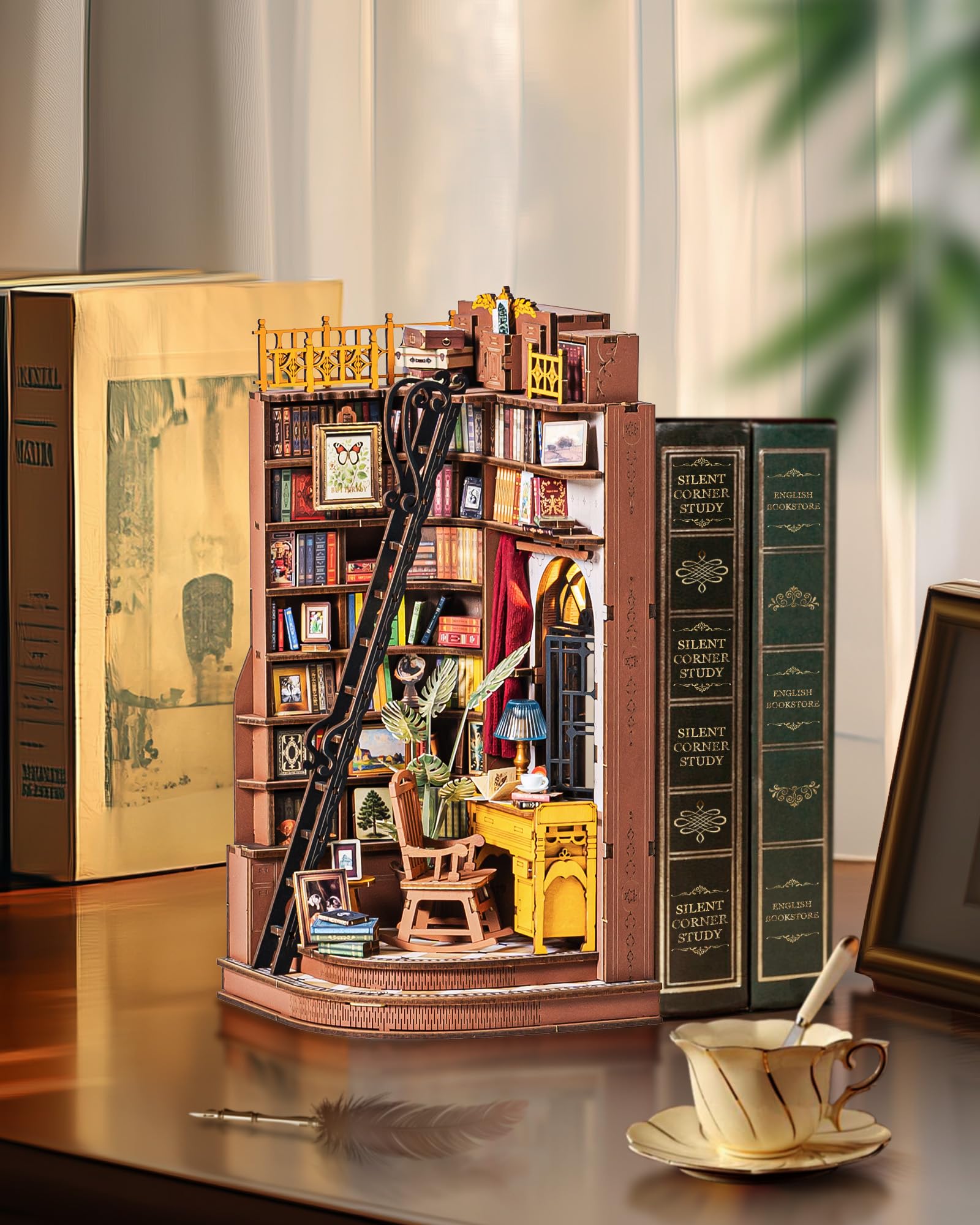

Rolife Silent Corner Study Book Nook Miniature Model Kit
A 196-piece DIY miniature kit that builds into a study/library book nook at 1:24 scale. Rolife’s Silent Corner Study turns the idea of a quiet reading space into a small construction project: you assemble the room rather than merely wishing you had one.
Price
£23.99
Editorial rating
5 / 5
At a glance
One-line verdict
A characterful book-nook kit for readers who enjoy making things, provided the miniature assembly is part of the attraction rather than an obstacle to the finished ornament.
Best for
Book lovers aged 14 and over who enjoy miniature craft projects and want something they have made to display alongside their reading.
Skip it if
You want a finished decoration, dislike working with small model components, or need a kit intended for children under 14.
The full picture
A study is an appealing thing to own until you remember that a full-sized one requires a spare room. Rolife’s Silent Corner Study takes the less architecturally demanding route: a miniature study/library scene built as a book nook. Its appeal is quite specific. This is for someone who likes books, likes small things and considers assembling 196 pieces a pleasant prospect rather than a threat.
The subject does much of the work here. A miniature library displayed among real books has a pleasing sense of belonging; it is not just a model looking for somewhere to stand. At 1:24 scale, the kit turns a familiar kind of room into something to examine closely. Our reason for choosing it is that relationship between the build and its eventual setting. The finished object has a purpose beyond proving that you followed the instructions.
There are two separate purchases to consider, even though they arrive in one kit: the activity and the ornament. If you only want the latter, the assembly is a substantial detour. If both appeal, the proposition becomes much stronger. You spend time constructing a scene you actually want to keep, rather than completing a hobby project and then quietly negotiating its relocation out of the living room.
Rolife rates the difficulty at three out of five stars and recommends the kit for ages 14 and over. That places it as a project worth choosing deliberately, not something to assume will be effortless because the finished room is small. The 196-piece count gives a useful sense of the task, but it is not a stopwatch: patience and enthusiasm for miniature assembly matter more than treating the number as a completion target. We would choose it for someone already attracted to careful craft work, rather than try to convert a reluctant recipient through sheer tiny-library charm.
The wood-based construction also makes this a different proposition from buying a finished decorative object. Making it is the point, and the scene supplies the motivation to carry on. There is a light to test during assembly, with the instructions specifying two self-supplied AAA batteries. Set those aside before starting; discovering that your miniature study has joined the national tradition of waiting for batteries is avoidable.
The strongest reason to choose Silent Corner Study is therefore not complexity for its own sake. It is the prospect of making a small, bookish display that feels at home on a bookshelf. For a patient reader with a taste for miniatures, that is a convincing combination. For someone who simply wants the shelf styled by this afternoon, buy a finished ornament instead.
The Irresistible
- The study/library subject gives the finished miniature a particularly fitting display setting among real books.
- Combines a 196-piece making project with an ornament you have a reason to keep on show.
The Clever Part
- The 1:24 scale suits the appeal of recreating a recognisable room in miniature.
- A manufacturer-rated three-out-of-five difficulty offers a useful guide when choosing a craft project.
The Fine Print
- The light-testing batteries are not included: you need two AAA/LR03/AM4 1.5V batteries.
Buyer questions answered
How many pieces are in the Rolife Silent Corner Study kit?
The kit contains 196 pieces and builds into a miniature study/library book nook.
How difficult is the Rolife Silent Corner Study to build?
Rolife lists the difficulty as three out of five stars and recommends it for ages 14 and over. Treat it as a model-making project, not a ready-made decoration.
What batteries does the kit require?
The assembly instructions specify two self-supplied AAA/LR03/AM4 1.5V batteries for testing the light.
What scale is the Rolife Silent Corner Study?
The listed scale is 1:24.


Atari 2600 Plus Games Console
The Atari 2600+ is a cartridge-playing retro console with HDMI output, a CX40+ joystick and a 10-in-1 game cartridge included. It brings a very physical sort of gaming back to the television, without requiring the television to be equally ancient.
Price
£107.61
Editorial rating
4.5 / 5
At a glance
One-line verdict
A pleasingly specific retro games console for people who consider real cartridges and a dedicated joystick part of the pleasure, not obstacles to starting a game.
Best for
Atari enthusiasts with 2600 or 7800 cartridges, and curious newcomers who specifically want the physical cartridge-and-joystick experience.
Skip it if
You simply want access to retro games without collecting or handling physical media.
The full picture
The Atari 2600+ is for people who think choosing a game should occasionally involve picking up an actual object. Not scrolling past a picture of one, or searching a library large enough to require its own librarian. A cartridge goes into a console; a joystick supplies the instructions. That physical ritual is the point, and it gives this machine a more particular appeal than simply being another way to play old games.
Its strongest feature is the bridge between old media and a current television. The 2600+ plays Atari 2600 and Atari 7800 cartridges, then sends video over HDMI. For someone with a surviving collection, that makes the cartridges useful again without requiring an elderly television to join the reunion. Support for both systems also gives the console a broader purpose than its name initially suggests.
There is an important boundary here: Atari says it works with most cartridges, not all of them. Anyone buying principally to revive one treasured game should treat that distinction seriously. A collection can contain plenty of potential entertainment and still have precisely the wrong exception. This is a convincing route back into cartridge gaming, not a blanket promise that everything in the loft will cooperate.
Inside, the approach is modern rather than archaeologically faithful. The console uses emulation software, including Stella and ProSystem, to play the cartridges. That makes its appeal worth defining carefully. You are getting physical media and a dedicated console built around it, not the original circuitry in a fresh case. For buyers chiefly interested in putting their cartridges to work, that is a reasonable trade. For hardware purists, it is a fundamental distinction rather than a footnote.
The standard package gives newcomers somewhere to start: a CX40+ joystick and a 10-in-1 game cartridge are included. You need not already possess a labelled box of childhood possessions to have a reason to switch it on. DB9 controller connections are part of the console too, while the body is described as 80% of the original Atari 2600's size. The presentation remains deliberately console-like: a dedicated Atari machine, not merely a library of games tucked into something else.
HDMI and USB-C power cables are included, although a power adapter is not. Allow for that before planning the ceremonial first game. There is also a widescreen mode, should you want the picture to occupy more of a modern display; it is an option rather than the main reason to choose this console.
The buying decision ultimately rests on whether the cartridge matters to you. If all you want is old games, the physical-media commitment may feel like an unnecessary extra step. If selecting a cartridge is part of the pleasure, the 2600+ has a distinctive job: it lets a collection be played rather than merely preserved. Nostalgia is doing some of the work here, certainly. At least it has been given something to plug into.
The Irresistible
- Plays most Atari 2600 and 7800 cartridges through HDMI, giving physical collections a practical role on a modern television.
- Keeps cartridge selection and a dedicated joystick central to the experience, rather than treating them as decorative nostalgia.
The Clever Part
- Includes a CX40+ joystick and 10-in-1 cartridge, so an existing game collection is not essential.
- The console is 80% of the original Atari 2600's size.
- HDMI and USB-C power cables are included.
The Fine Print
- No power adapter is included.
- Uses software emulation rather than recreating the original internal hardware, an important distinction for purists.
Buyer questions answered
Does the Atari 2600 Plus play original cartridges?
Yes, the Atari 2600+ supports most original Atari 2600 and Atari 7800 cartridges.
Can the Atari 2600 Plus connect to a modern television?
Yes, it outputs video over HDMI, and an HDMI cable is included. It also offers a widescreen mode.
What comes with the Atari 2600 Plus?
The standard package includes the console, a CX40+ joystick, a 10-in-1 game cartridge, an HDMI cable and a USB-C power cable. A power adapter is not included.
Does the Atari 2600 Plus use emulation?
Yes, the console plays cartridges using emulation software, including Stella and ProSystem. It is not a recreation of the original console's internal hardware.